Medical Assistance at Red Devils Match Augmented Through 5G Network Slicing
Published on June 15, 2026 by Jan Van Rossem

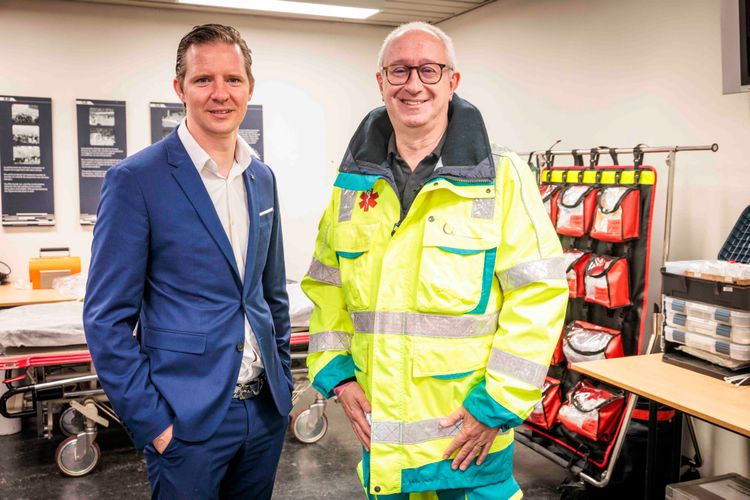
What sets this test apart is the use of 5G network slicing to guarantee a stable, reserved connection for medical assistance during a major public event. Together with Proximus, CEDIMED Brussels, in collaboration with the Emergency Department of UZ Brussel, activated a dedicated slice for the medical post in and around the King Baudouin Stadium, allowing real-time information to flow securely to the hospital regardless of how busy the network became. This was the first time in Belgium that multiple 5G slices were used simultaneously at one live location, marking an important step toward integrating advanced connectivity into emergency care during large-scale events, and a clear example of how innovation and clinical practice come together within CEDIMED Brussels.
What is 5G network slicing
5G network slicing is a technology that divides a single mobile network into several independent, virtual "lanes." Each lane, or slice, can be reserved for a specific application, allowing critical services to keep a stable and protected connection even when the rest of the network is under heavy load. This is made possible thanks to a 5G standalone network, which runs on a fully independent 5G core and allows slicing to be deployed at commercial scale.
Why do we test this?
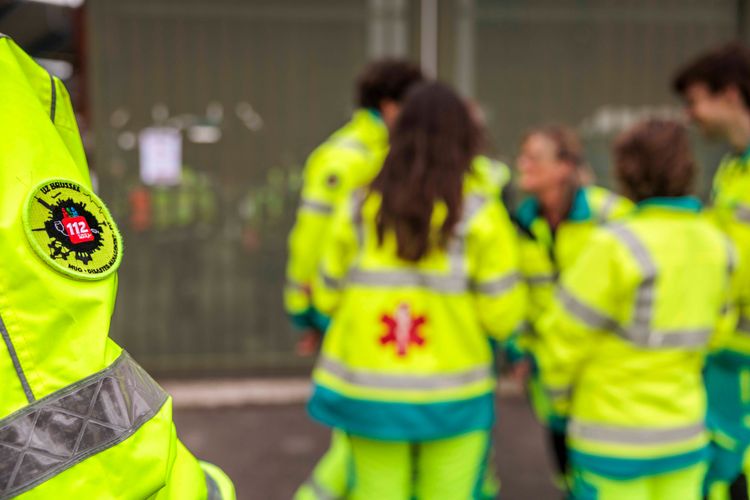
Large public events bring tens of thousands of visitors who all use the mobile network at the same time, often pushing it to its limits. For the medical teams that the Emergency Department of UZ Brussel deploys on site, a reliable connection is essential to:
- Stay in continuous contact with the hospital, even during peak network load.
- Share real-time information about patients with the medical post and supporting departments.
- Coordinate quickly with hospital-based teams if additional support is needed.
- Ensure that critical medical communication is never delayed or dropped due to network congestion.
For CEDIMED Brussels, this test is also a way to evaluate, together with our clinical end-users, how new connectivity solutions can be validated and translated into reliable tools for medical readiness during major events.
Why do we use technology
Effective medical support during large-scale events requires seamless, uninterrupted communication between the field and the hospital. By integrating advanced 5G technology, CEDIMED Brussels aims to enhance both efficiency and patient safety, while building knowledge that feeds directly back into our education and research activities.
A mission-critical 5G slice provides the medical post with a dedicated, protected connection, ensuring information can be exchanged with the hospital without interruption, regardless of how many other people are using the network nearby.
This dedicated connectivity allows healthcare workers from the Emergency Department of UZ Brussel to remain in direct contact with the hospital, supporting faster decision-making and better coordination in case of incidents.
By combining 5G network slicing with our existing emergency care expertise, CEDIMED Brussels ensures a safer and more connected medical response during high-attendance events, and gathers valuable insights that can inform future training and innovation projects.
By securing a dedicated 5G slice for our medical post, we ensured that our team could stay in constant contact with the hospital throughout the event, even with tens of thousands of fans on the network at the same time. This kind of reliable connectivity is exactly what we need to support care teams during large-scale events. - Prof. Dr. I. Hubloue
Looking ahead
This test fits within CEDIMED Brussels' broader ambition to build a connected emergency care ecosystem, where clinical practice, research, education, and innovation reinforce each other. The insights gathered during this first Belgian deployment of simultaneous 5G slicing will help shape how connectivity is used in future large-scale events, and how CEDIMED Brussels continues to bridge technology and patient-centred care.